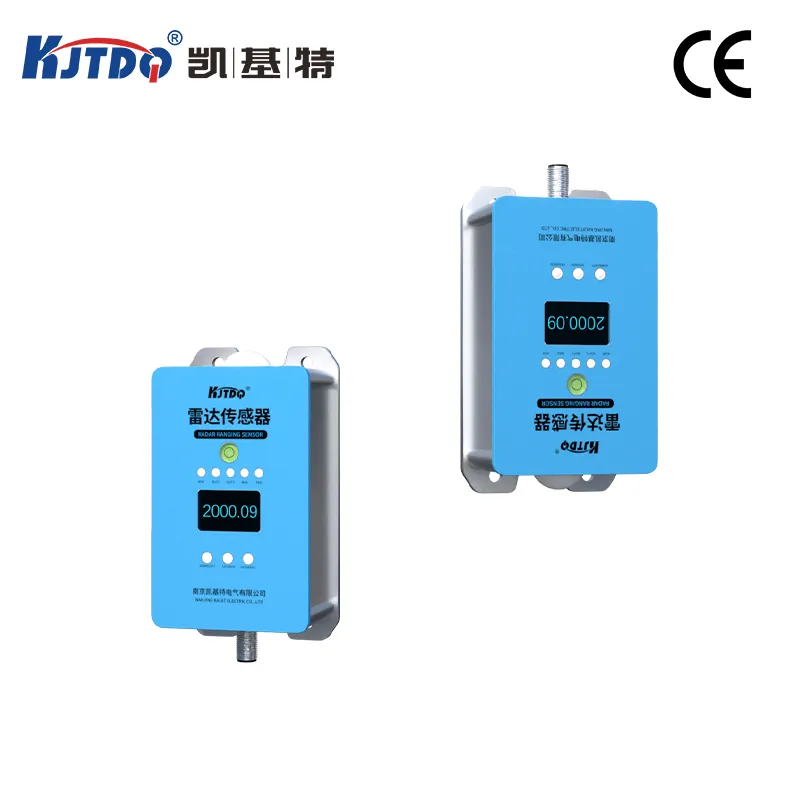
雷達液位變送器英文名稱
- 時間:2025-03-11 11:32:13
- 點擊:0
What Is the English Name for Radar Level Transmitters? Technical Insights & Global Applications
Imagine a chemical plant where precise liquid level monitoring prevents hazardous spills, or a water treatment facility relying on real-time data to optimize operations. In these scenarios, a radar level transmitter becomes an indispensable tool. But what exactly is its English technical name, and why does this terminology matter in global industries? Let’s dive into the details.
Radar Level Transmitter: The Official English Terminology
The English term for 雷達液位變送器 is “radar level transmitter” or “radar level sensor.” This device uses electromagnetic waves to measure liquid levels in tanks, silos, or containers, offering non-contact, high-precision monitoring. The name itself reflects its core technology:
- Radar: Derived from Radio Detection and Ranging, emphasizing its use of microwave signals.
- Level Transmitter: Highlights its function to convert detected data into standardized output signals (e.g., 4–20 mA or digital protocols).
This terminology is universally adopted in technical manuals, international standards, and industrial procurement, ensuring clarity across languages and regions.
How Radar Level Transmitters Work: A Global Standard
Radar level transmitters operate on two primary principles: Frequency Modulated Continuous Wave (FMCW) and Pulse Radar. Both methods emit microwaves toward the liquid surface, measuring the time delay or frequency shift of reflected signals to calculate distance.
Key advantages driving their global adoption include:
- Non-Contact Measurement: Eliminates corrosion risks from aggressive liquids like acids or molten sulfur.
- High Accuracy: Achieves ±1 mm precision even in extreme temperatures (-200°C to +400°C).
- Versatility: Functions effectively in vapors, dust, or foam—common challenges in industries like oil refining or food processing.
Why the English Name Matters in Industrial Applications
Standardized terminology ensures seamless communication in multinational projects. For instance:
- A German engineer specifying a “radar level transmitter” for a Chinese wastewater plant avoids confusion.
- Procurement teams searching for “radar level transmitter datasheet” instantly access technical documents from brands like Siemens, Emerson, or VEGA.
Industries relying on this technology:
- Oil & Gas: Monitoring crude oil in floating roof tanks.
- Pharmaceuticals: Ensuring sterile bioreactor batch consistency.
- Agriculture: Managing grain silo levels to prevent overflow.
Comparing Radar Level Transmitters to Other Technologies
While ultrasonic and guided wave radar (GWR) devices also measure levels, radar level transmitters dominate in high-performance scenarios:
| Feature |
Radar |
Ultrasonic |
GWR |
| Measurement Range |
Up to 120 m |
Up to 60 m |
Up to 30 m |
| Environmental Impact |
Unaffected by air density |
Affected by temperature/humidity |
Requires probe contact |
| Maintenance |
Minimal |
Frequent cleaning |
Probe replacement |
Innovations in Radar Level Transmitters
Recent advancements focus on enhancing usability and integration:
- Smart Diagnostics: Predictive maintenance alerts via IoT-enabled devices.
- Hybrid Antenna Designs: Compact 80 GHz sensors for small tanks in breweries or chemical labs.
- HART/Profibus Compatibility: Simplified integration with existing SCADA or DCS systems.
A case study from a Canadian mining company showed a 40% reduction in downtime after switching to 80 GHz radar transmitters for slurry tank monitoring.
The Role of Terminology in Global Trade
Uniform use of “radar level transmitter” streamlines cross-border commerce:
- Regulatory Compliance: Meets API, IEC, and ATEX certifications.
- Technical Training: Mexican technicians and Australian engineers reference identical manuals.
- E-commerce Optimization: Suppliers using the term rank higher on platforms like Alibaba or Thomasnet.
Future Trends: AI and Radar Fusion
Emerging applications combine radar data with machine learning algorithms to predict leaks or optimize inventory. For example, a European LNG terminal now uses AI-driven radar level transmitters to forecast tank levels with 99.5% accuracy, reducing manual inspections by 70%.
From its precise English nomenclature to its role in smart manufacturing, the radar level transmitter exemplifies how technology and terminology converge to drive industrial efficiency. Whether you’re sourcing equipment in Tokyo or designing a plant in Texas, understanding this term unlocks access to a world of innovation.